LAND EXCHANGES OF PUBLIC LANDS ADMINISTERED BY THE BUREAU OF LAND MANAGEMENT

EXECUTIVE SUMMARY

The disposal of Bureau of Land Management (BLM) administered public lands by the land exchange process, where the federal lands are traded for private or State lands of equal value, has provided many benefits for Federal public land management - improved public access, management efficiencies, protection of environmental values - and to States and private land owners as well. However, controversy and criticism over land exchanges and land exchange appraisals have plagued the BLM for decades, primarily related to exchanges involving high-value public lands around fast growing urban areas in the western states.

The problem has become more acute in recent years as increased demand has ballooned the value of lands suitable for urban development. The issue is the fact that the BLM and the public are being shortchanged by the way the land exchange authority is being used for the disposal of high value public lands in urban areas. The land exchange process is flawed, and the problem will not be solved by trying to make better land appraisals.

The Public Lands Foundation (PLF) believes that most of the BLM land exchange problems would be mitigated or eliminated if:

The PLF asks the Secretary of the Interior to develop new policies and guidelines for making land exchanges, and for selling high value lands at public auction to ensure that the full and fair value is received for the BLM lands and that the money is used to acquire other lands that are needed for conservation purposes.

ISSUE

Land exchanges have been a valuable tool for the Bureau of Land Management, helping the agency acquire private and State lands needed for such public purposes as blocking up federal ownership patterns for more efficient management, obtaining public access to public lands, and protecting environmental values. The issue is that the BLM and the public are frequently shortchanged by the way the land exchange authority is being used to dispose of high value public lands. This has caused public controversy and criticism of BLM land exchanges for over 40 years. Most land exchange controversies center on land valuation and whether or not the BLM, and therefore the public, get a "raw deal" in the land trade. After many land exchanges are completed, the value of the land acquired from the BLM is quickly increased or inflated by development or resale, and the news media raises questions about "financial windfalls" to the exchange proponent, and about the competency of the BLM.

The land exchange controversy problem affects the U. S. Forest Service as well as the BLM. It has risen to the attention of the General Accounting Office, which has recommended that the Congress may want to consider directing both agencies to discontinue their land exchange programs. The BLM has attempted to deal with the continuing controversies by revising the appraisal and appraisal review processes. However, appraisals are just the lightning rod; the real problem is in the land exchange process. A BLM land exchange is a "closed deal" between the BLM and the exchange proponent, usually a private party. The general public is shut out of any opportunity to acquire the government land. They can only give input on whether or not the public land should transferred out of federal ownership, and criticize the deal after it is done.

Furthermore, after a land exchange is completed: - the exchange proponent, frequently, will quickly increase the value of the land acquired from the BLM by developing the land or reselling it at a much higher price, - in contrast, the BLM will commit the land acquired in the exchange to a long term public land management program, and will not reappraise or test the future value of the land in the market. These factors set the BLM up for potential controversy and criticism during and after many land exchanges. The answer is not how to make better land appraisals, but how to better select situations for making land exchanges.

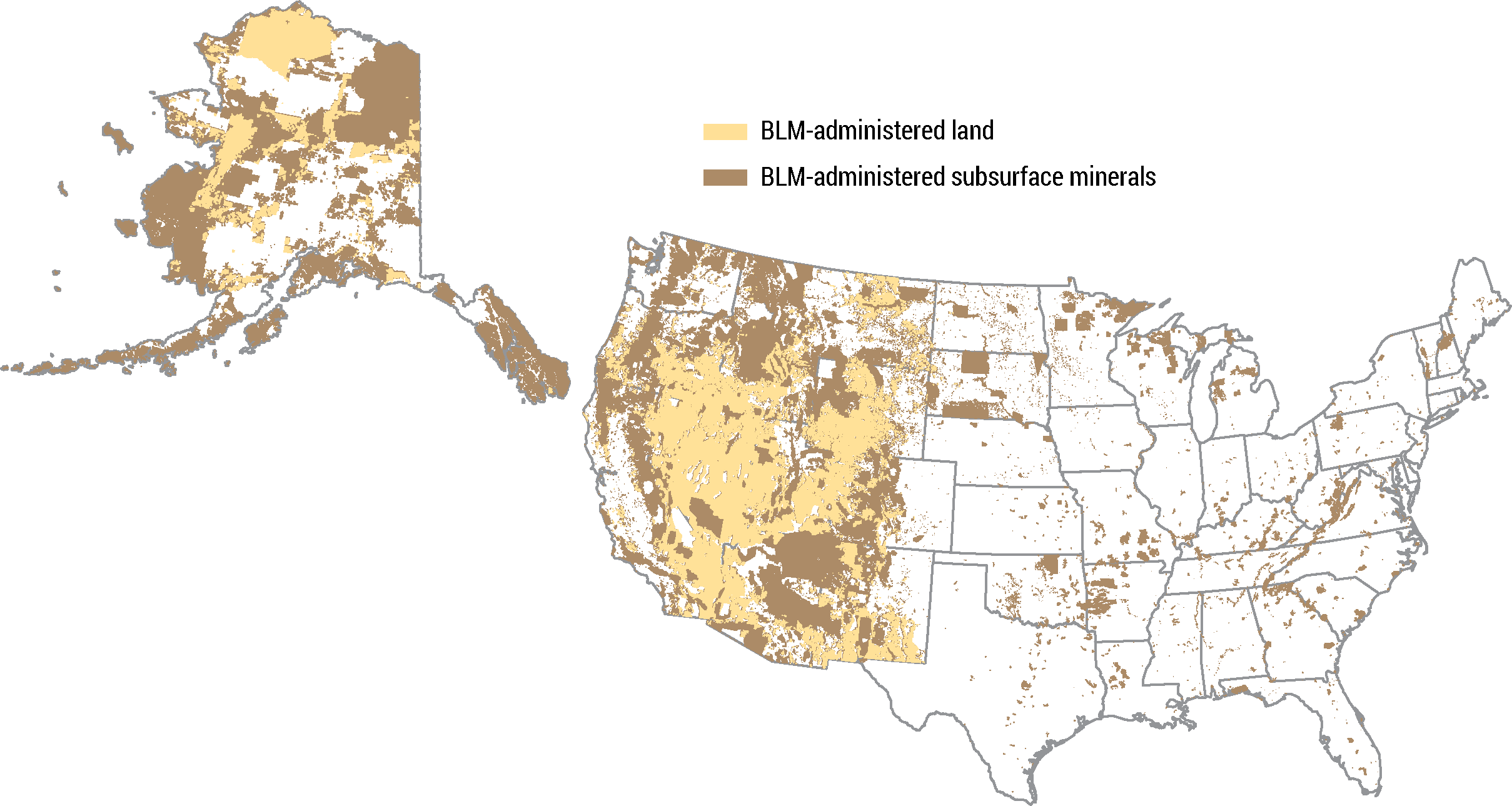
There is an urgent need to resolve this problem. There are thousands of acres of BLM lands around fast growing urban areas in all of the western states. BLM should be able to use the value of these lands to acquire other lands needed for federal conservation purposes, without the turmoil of the current land exchange program.

HISTORICAL BACKGROUND

The BLM, and its predecessor, the General Land Office, have been making land exchanges for over 65 years, ever since land exchanges were authorized by the Taylor Grazing Act in 1934. In the 1960's, Congress began passing various special Acts to authorize land exchanges to help other federal land management agencies acquire non-federal lands within the National Park and National Wildlife Refuge Systems. The Federal Land Policy and Management Act of 1976 (FLPMA) replaced the Taylor Grazing Act with new authority for BLM land exchanges, and the Federal Land Exchange Facilitation Act of 1988 was designed to streamline land exchange procedures.

In the early years, most BLM land exchanges were made with the States and substantial progress was made to consolidate or rearrange the ownership patterns of Federal public and State Trust lands. In the 1950's, private land owners began applying for land exchanges with the BLM. Some land owners wanted to block up intermingled federal and private lands in rural areas for more efficient management in areas like the checkerboard railroad grants which cross many of the western States. In many cases however, rural land owners just wanted to move their land holdings closer to urban areas where there was more development potential. In the 1960's there began a flurry of BLM land exchange activity in behalf of National Park Service (NPS) programs. Congress passed special Acts authorizing land owners within NPS units like the Point Reyes National Seashore and the Lake Mead National Recreation Area to trade their private lands for any property "under the jurisdiction of the Secretary of the Interior".

In one of the earliest NPS exchanges in 1962, it took over six thousand acres of BLM lands in the desert near Phoenix to equal the value of several hundred acres of privately-owned, ocean-front lands north of San Francisco. The ocean-front lands became part of the Point Reyes National Seashore. The developer, who had purchased this Point Reyes parcel so he could exchange it for the large block of Arizona lands, immediately began to construct the city of Fountain Hills on the lands near Phoenix. The National Park Service got the land they wanted. All that the BLM received from the exchange was controversy over land values, public criticism of the exchange, and two Congressional investigative committee hearings that accomplished little except to further embarrass the BLM. This same scenario has been replayed over and over again during the past 40 years throughout the West with different players in different places as investors, developers and land speculators have sought ways to use the BLM's land exchange authority as a way to have an inside track on the "land boom" around fast growing urban centers.

The exchange process gives the land exchange proponent an avenue to acquire blocks of developable lands in prime locations from the federal government, and without competition. In some cases, the proponents trade large blocks of rural lands that have little development potential, but which are valuable for BLM or other federal agency management programs, for a smaller acreage of BLM lands adjacent to urban centers. In other cases, the proponents trade smaller tracts of high value private lands, with "special" environmental values that need protection in public ownership, for larger blocks of BLM lands that lay in the path of urban expansion. In each of these situations, the values of the BLM and private lands were considered equal at the time of the exchange, but it was obvious that the lands BLM traded away had much greater potential for value increases after the exchange.

With expertise in real estate and knowledge of the direction of urban expansion, many land exchange proponents inherently have the inside track on the potential values of properties once they are in their hands, and these companies have used the exchange process to gain a non-competitive advantage in getting federal lands. Some have used the Exchange Facilitation Act authority to buy an additional 25 percent of choice development lands without competition. Usually the proponents who deal in these types of urban land exchanges have seemingly unlimited resources and influential contacts with agencies, Congressional delegations, and city, county and state officials to help advance their exchange proposals. This is a major reason why BLM has continued this controversial program over the years.

Many of these urban area exchanges are "three way" land exchanges which involve offered private lands that are inside other federal land management areas. The other federal land managing agencies have viewed BLM lands a "cash cow" that provides opportunities to acquire inholdings at no cost to the National Park, Wildlife Refuge and Forest programs. In these situations, the exchange proponents usually have the weight of the Administration, Congress and the general public behind them when they approach the BLM about land exchanges to help "block up" these other National Federal Land Systems. These "three way" exchanges have usually resulted in the exchange proponent getting urban land for development, the National Park Service, Forest Service or Fish and Wildlife Service getting land to block up their management areas, and the BLM getting the "black eye" of adverse publicity over the land appraisals used in the exchange.

Over the past decade, the Las Vegas, Nevada area has provided many examples. Lands appraised by BLM in the $10,000 to $30,000 per acre range have been resold by the new owners for more than double those amounts within days of the exchange transactions. Headlines like "Agencies outgunned in land deals" and "Land Exchange Program Shortchanges Taxpayers, GAO Reports" illustrates the media reaction and the public's concerns. It needs to be acknowledged that the BLM has made some significant acquisitions of environmentally sensitive lands by trading off urban public lands. Prime examples include the lands in the BLM's San Pedro National Riparian Conservation Area, Cienega National Conservation Area and Agua Fria National Monument in Arizona, the Silver Saddle Ranch in Nevada, and the desert tortoise habitat in the St. George, Utah area, all of which were acquired in the trades of urban BLM lands. But even many of these transactions invoked controversy and public criticism at the time the exchanges were made, again over the land appraisal issue, because the exchange proponent was considered to have received a financial windfall from the land exchange.

In contrast with urban land exchanges, there have been many land exchange successes for the BLM and for State and private land owners over the years that have attracted relatively little attention or controversy, primarily because they have involved rural lands of similar character and with little or no development potential. The per-acre values have been similar, and thus the acreages of the federal and non-federal lands in these rural land exchanges have been roughly equivalent. Most of these rural land exchanges have been made to facilitate management of intermingled Federal, State and private lands, to improve public access to public lands, or to put environmentally sensitive lands into public ownership. These types of exchanges typically cause little controversy because the new owner of the former public lands usually does not change the existing use of the land.

THE PROBLEM AND A SOLUTION

Land exchanges, which involve developable public lands in urban settings, will invariably produce controversy and public criticism of BLM because:

1. Disposal of public lands by exchange eliminates market competition from other prospective bidders who in many cases would pay far more than the appraised value, and

2. The exchange proponent will commonly, and quickly, obtain what the public perceives as "windfall" financial profits from the development or resale of the former public lands.

The resulting criticism and faultfinding over the years has probably done more to tarnish BLM's image as a responsible manager of public lands than any other recent public land issue. The problem is created by what the exchange proponent invariably will do to dramatically increase land values after receiving title to the urban lands. It will not be solved by fine-tuning the BLM's land appraisal/appraisal review processes. The best way to validate an appraisal and to eliminate a future land appraisal controversy is to sell the public land at open, competitive public auction.

The most feasible solution to the problem is to stop disposing of high value urban public lands by land exchange. Urban public lands that are best suited for residential/industrial development should be offered for sale at public auction to give bidders a competitive opportunity to buy and to more firmly establish the fair market value of the public land.

In 2000, Congress enacted a new law, the Federal Land Transfer Facilitation Act (FLTFA), which authorizes the Department of Interior to retain the receipts of land sales and use them for the purchase of non-federal lands within the same State for federal management purposes. This would allow the BLM to accomplish what they have been trying to do through land exchanges, i. e. use the value of urban public lands to acquire non-federal lands for conservation purposes; and, by selling the urban public lands at public auction, the land value controversies would be largely eliminated.

There is another facet of the land exchange problem that is often overlooked or forgotten in the turmoil over land appraisals, and that is the question of the "need" to make the land exchange. Does the Federal government really need to acquire the offered lands? The fact that the offered land lies within a National Forest, Park or Wildlife Refuge, or would help block up BLM lands, or contains some special environmental resource values, does not necessarily mean that the Federal government needs to acquire the land.

Most land exchanges are driven by the exchange proponent, sometimes aided and abetted by another Federal land management agency which has nothing to lose and everything to gain in the exchange. Before BLM gets very far into the difficult, costly, and time consuming land exchange process, it should be well established that the proposed land exchange is clearly in the public interest. A fully informed public needs to have adequate opportunity for input to the decisions on both the disposal of the public lands and the public need for acquiring the offered lands. Local public involvement will be critical to decisions on whether to exchange or sell public lands which have development potential.

PLF POSITION AND RECOMMENDATIONS

The BLM has been severely criticized by the media, the public, the Inspector General and the General Accounting Office for making land exchanges involving high value public lands, usually targeted for urban development, that have resulted in enormous "windfall" profits for the exchange proponents.

The PLF agrees that this is a serious problem and that the concerns expressed are valid - the present land exchange process is fatally flawed. The exchange of lands with greatly differing development potential, where the values of the public lands have not yet reached their potential, will inevitably lead to "windfall" profits, abuses, political interference and loss of public confidence in the agency.

The PLF recognizes that the BLM must follow the direction of Congress in carrying out a land exchange program, but PLF believes that there are other ways of making land disposals which would accomplish the same goals and which would put to rest much of the controversy that is inherent in the current program. There are many thousands of acres of high value urban lands administered by the BLM in the western states, and these lands should be used to acquire other lands that are needed for conservation purposes.

To accomplish this goal, the PLF recommends that:

1. Major changes need to be made in BLM's high value land disposal process.

2. Disposals of high value, developable public lands should be made through sale at competitive auction with the money from the sale being used to purchase non-federal lands that are needed for BLM management purposes. The Federal Land Transaction Facilitation Act (FLTFA) provides new authority for these types of transactions.

3. Disposals of BLM administered lands by land exchange should be confined to trades where the federal and non-federal lands are similar in character and use potential, and where it is clearly in the public interest to acquire the non-federal land.

4. When BLM administered lands are disposed of by exchange or by sale under FLTFA, first priority should be given to acquisition of lands needed by BLM management programs.

5. The BLM should develop new policies and guidelines for making land exchanges, and for selling high value lands at public auction to ensure that the full and fair value is received for the BLM lands and the money is used to acquire other lands that are needed for conservation purposes.

PLF will participate in that review process and will provide exceptional and objective professional experience to assist the BLM.


Return to Position Statements Page